The sewer lift station of municipal facilities is outdated. The pumps are nearing the end of their service life span, the controls require modernization, and the access hatch has degraded. The concrete wet well is robust and sturdy.
Should the entire station demolished and rebuilt? Not necessarily. It is essential to determine if the infrastructure is able to support an advanced system of pumping without compromising future capacity as well as reliability or accessibility.
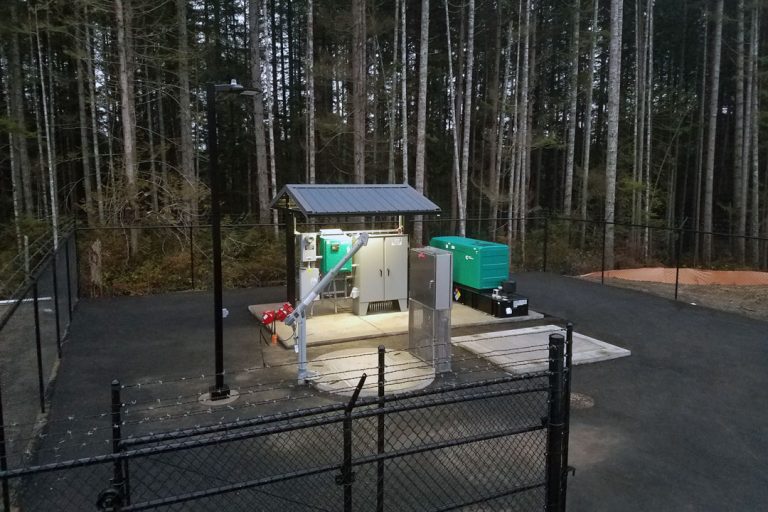
Image credit: romtecutilities.com
A carefully engineered retrofit to a pump station will help protect valuable infrastructure while replacing components that no longer meet functional requirements.
Start With the Structure Nobody Would Like to Replace
It’s costly and inconvenient to replace the wet-well because it is in the ground, connected to pipes, and is necessary for the collection of wastewater.
Retaining a concrete structure which is still functional could minimize the digging and construction.
However, damage to the access hatch could affect your decision. Romtec Utilities identifies wet well hatch replacement as a typical retrofit requirement. It might be more reliable to replace the top slab instead of attaching a new hatch on concrete that has deteriorated. This option can be utilized to increase accessibility and the functionality of the structure, without needing to rebuild the entire wet well.
A More Powerful Pump Modifies the Engineering
Let’s say a residential area has seen a significant increase in population since the first lift station was put in place. Existing pumps may not be able with the increasing flow of wastewater.
A pumping station upgrade could involve higher-horsepower pumps, but equipment selection cannot happen independently of the surrounding system.
Engineers must also think about the hydraulic needs of the system. This includes flow and the total dynamic pressure. A larger pump before evaluating the conditions could create more problems than it solves. Planning future capacity in the initial design makes later expansion significantly easier.
Check that the waste water is flowing during construction
Retrofitting a wastewater pumping station presents a unique challenge, which isn’t faced by other projects. The station may have to be operational for the duration of construction.
Even when contractors are busy the wastewater still flows in. According to the plan the project, a temporary bypass pumping system may be required to ensure service is maintained as existing equipment is removed or new equipment is installed.
Romtec Utilities addressed this type of challenge in the Federal Law Enforcement Training Center in Brunswick, Georgia.
The project required the replacement of two older wastewater lifting stations, and operating the facility. Specialized engineering on site as well as packaged systems and bypass pumping techniques helped accommodate existing station footprints as well as operational needs. The scenario illustrates why construction sequencing deserves attention prior to the installation process begins.
If replacing is the only option
Each station is not able to be repaired. A severely deteriorated wet well structure that is not strong enough, or significant changes to hydraulic requirements could make sewer lift station replacement better than making changes to the current installation.
The choice should take into account structural health, equipment compatibility, construction access to the site, service continuity, as well as long-term requirements for operation. Romtec Utilities starts retrofitting and replacing projects by identifying components that will be retained and those that will need to be replaced.
From there, the business designs site-specific engineering solutions including preliminary designs, as well as budgetary estimates. Prefabricated parts are also helpful in arranging installation and decreasing certain requirements on site.
The project won’t be finished until the pumps start
Modernized lift stations should operate as an integrated system. Prior to returning it back for regular maintenance, start-up testing and commissioning ensures that the pumps, controls, as well as the equipment that is associated with them, are in accordance to the established design.
Training and manuals for operators are equally vital. Maintenance personnel need to understand the new equipment, operating procedures and the documentation prior to taking over for the station.
A successful retrofit preserves the infrastructure, while addressing the limitations which led to the need for modernization.
Municipalities and property owners have to look beyond immediate repair. The most successful initiatives are those that incorporate the latest equipment in existing structures to continue to provide essential services as construction progresses. Also, they prepare the pumping system to keep operation for many years.