Small-tool machines are becoming increasingly important in modern manufacturing, especially as industries push for higher precision, smaller footprints, and greater energy efficiency. Whether used in electronics assembly, medical device fabrication, packaging modules, or micro-automation units, these machines rely on actuators that deliver impressive performance without occupying unnecessary space. This is where compact pneumatic cylinders prove their value. Designed to provide powerful linear motion in tight surroundings, compact cylinders have become essential for engineers and machine builders working with small-tool systems. Their unique combination of space efficiency, stability, and customizable performance makes them a preferred choice for advanced automation setups.
A Space-Optimized Design Built for Modern Machinery
The standout feature of compact cylinders is their condensed structure. Instead of the long barrel and extended mounting requirements seen in standard cylinders, compact models are engineered with minimal overall length. Every millimeter of the housing is optimized to support force output while preserving interior strength and piston stability. This compact geometry allows them to be installed directly inside machine frames, beneath tooling modules, or alongside delicate components where traditional cylinders simply cannot fit.
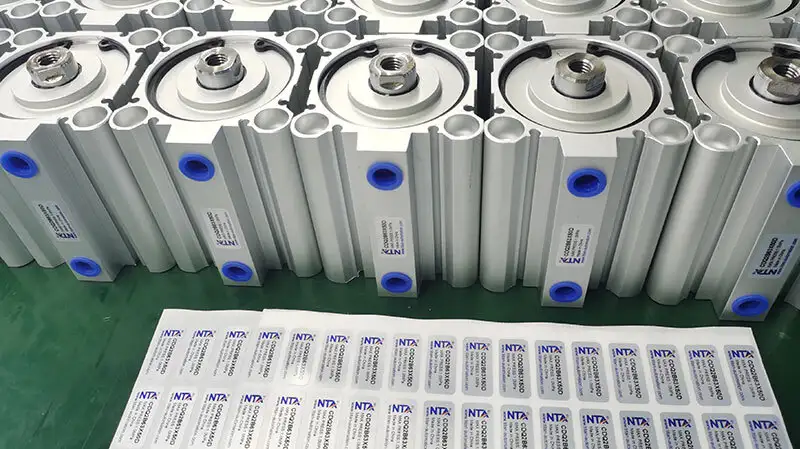
In small-tool machinery where intricate actions occur within confined areas this size reduction is more than a convenience; it is a necessity. Machine designers often face challenges integrating actuators without interfering with sensors, wiring, or micro-mechanical parts. Compact cylinders solve this by offering strong motion control without altering the overall machine layout.
High Force Output Despite Reduced Size
One of the most impressive qualities of compact cylinders is their ability to generate significant force relative to their size. The internal bore is engineered to maximize usable air pressure, allowing even a short-body cylinder to deliver considerable pushing or pulling power. This makes compact cylinders ideal for tasks like clamping, pressing, ejecting, or positioning components in small-tool machines.
What makes their performance even more notable is the consistency of motion. Compact cylinders maintain stable travel characteristics even during high-frequency cycling, a common requirement in micro-assembly systems. Their structural rigidity and precision machining reduce vibration, wobble, and air leakage three issues that can compromise accuracy in small-tool operations.
Flexible Mounting and Customization Options
Small-tool machines differ greatly in structure, purpose, and load requirements. For this reason, flexibility in mounting and design is a major advantage of compact cylinders. They are commonly available in a variety of mounting styles, including through-hole designs, threaded bodies, foot mounts, and flange mounts. This adaptability allows engineers to integrate them seamlessly into both horizontal and vertical arrangements.
Customization further enhances their usefulness. Manufacturers can modify stroke lengths, select alternative materials for corrosive environments, adjust rod diameters for stability, or add specialized seals for high-speed or cleanroom conditions. These enhancements ensure that compact cylinders can meet the unique needs of any small-tool machine, from ultra-fast pick-and-place robots to miniature pressing stations.
Energy Efficiency and Low Maintenance for Continuous Operation
Small-tool equipment often runs on continuous cycles, meaning every component must be durable and efficient. Compact cylinders require less compressed air than larger cylinders due to their reduced internal volume, making them more energy-efficient over long periods of operation. This energy savings becomes significant in facilities where dozens or hundreds of actuators operate simultaneously.
Maintenance requirements are also minimal. Because compact cylinders contain fewer extended components, they experience less bending stress and rod misalignment. High-quality seals and polished barrel surfaces contribute to longer service life, reduced downtime, and smoother machine performance. In a small-tool environment where reliability is crucial, these attributes give compact cylinders a measurable advantage.
Why Small-Tool Machines Depend on Compact Cylinder Technology
The success of small-tool machines depends on rhythm, accuracy, and the ability to perform complex tasks in extremely tight spaces. Compact cylinders enable all three. Their short length supports creative machine design, their force capacity ensures dependable actuation, and their energy efficiency keeps long-term operation sustainable. These features collectively make compact cylinders from Titan Automation a pneumatic cylinder manufacturer one of the most valuable actuators for modern micro-automation and precision-tool systems.